The Replicator Question
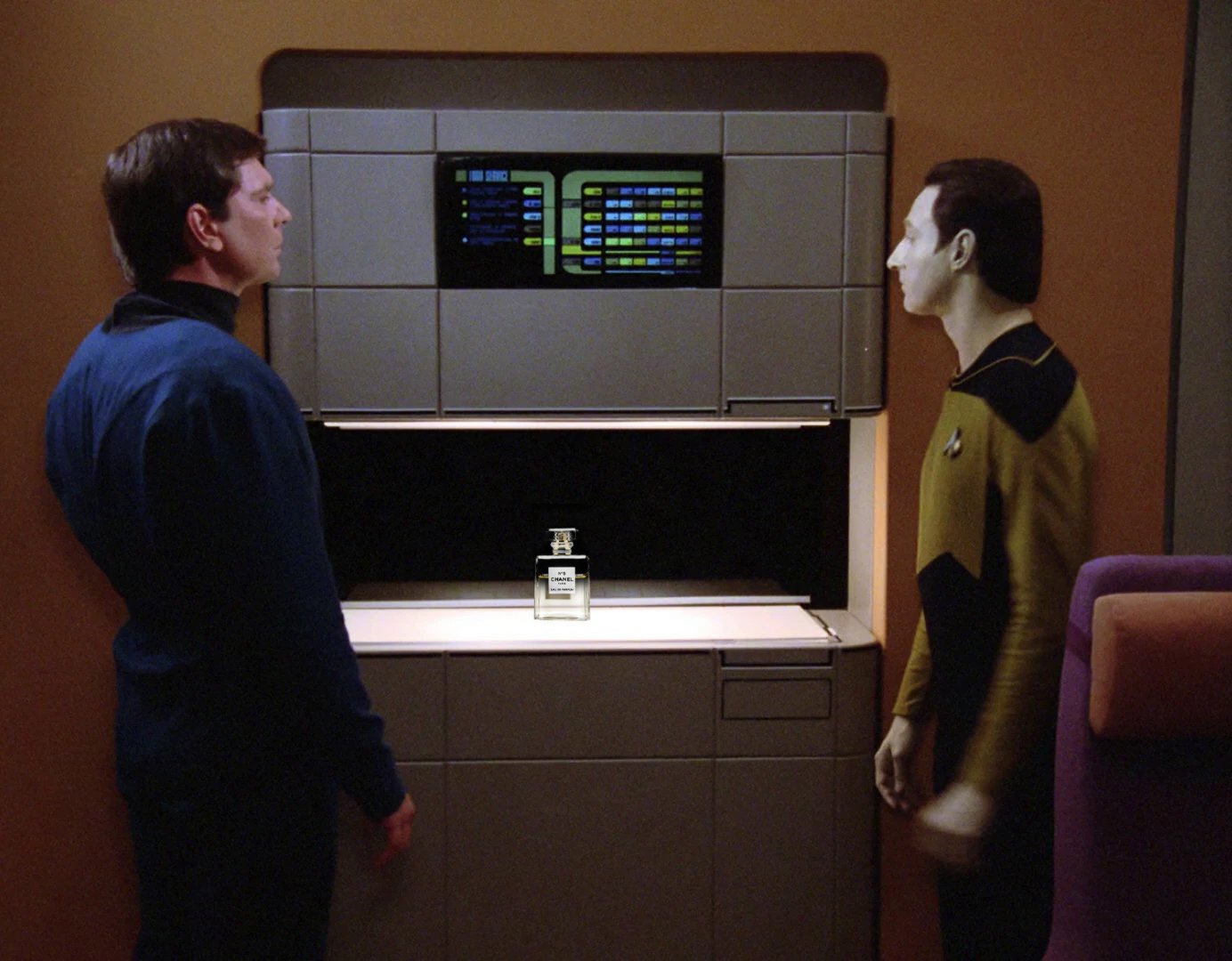
THE REPLICATOR QUESTION is a thought experiment and writing prompt designed to invite critical thinking about perfume as a cultural object. It applies the mechanics of the fictional technology of the "replicator" as it appears in the television series Star Trek, especially Star Trek: The Next Generation, to our understanding of perfume.
The framework of speculative or "science" fiction is used to create a space of free play for writers, perfumers, and fragrance enthusiasts to apply pressure to assumptions and norms related to perfume, and to imagine what a future for perfume might look like.
The most basic, fundamental version of The Replicator Question is as follows:
If the Star Trek replicator was a real technology, what would happen to perfume?
To explore the Question’s working definitions of The Replicator and Perfume, expand the menus below. For more variations on the question, continue down the page.
-
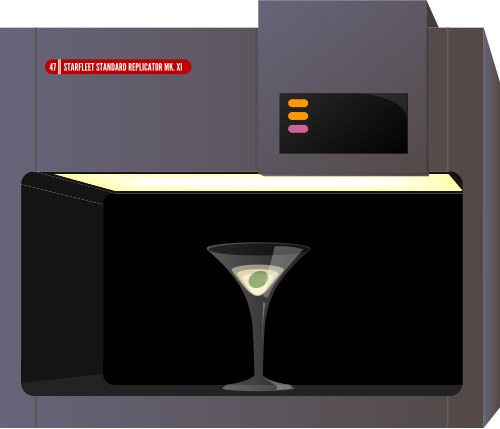
In Star Trek, the "replicator" is a small interface which can produce, via a spoken request, any physical object, food or substance. In the series, set several centuries in the future, replicator technology has essentially eliminated 21st-century ideas of scarcity and hunger. Consumer society–the world of brands–have also faded as differentiation and commercial capitalism are replaced with a utopian society free from want. However, this does not mean that culture as such has been eliminated. Within the series, the replicator is shown to generate ceremonial objects, regional cuisines, and other specific cultural materials with ease–so long as the prompt is accurate.
This simplified, bare-bones understanding of what the replicator is can be used in your exploration of the the Question. You're also welcome to explore the Wikipedia page on Replicator Science to find more examples of how the replicator has been used within the series and different interpretations of its science fictional limits. For first-time writers, we suggest not getting too bogged down in the details.
-
For the purposes of this experiment, it is useful to define what we mean by "perfume," although interpretations of what perfume "is" can also be the fundamental work of The Question itself. However, for those looking to operate with a basic set of guidelines, we can arbitrarily define perfume in the following ways:
Perfume is a liquid material that contains fragrance oil suspended in some kind of stable liquid, whether alcohol, water, or a fictional liquid that behaves in a similar way. When sprayed, the suspending liquid evaporates and the scent or fragrance oil remains on the surface where it was sprayed. Perfume is contained in bottles, and is formulated by perfumers for a variety of purposes: ritual, ceremonial, commercial, pleasurable, artistic. Most perfumes have names, and the name of a perfume usually refers to a specific formula. Some variations or approaches to the Question which involve different definitions of perfume can be found in the next section. Feel free to research the history of perfume on your own as well.
Variations on the Question
Many people, especially seasoned Star Trek fans or experienced perfume writers, will find the basic version of the Question enough of a jumping-off point. For those who want to guide their exploration, here are some additional variations on The Question.
We also encourage those who answer The Replicator Question to form and share their own variations on The Question.
Vessels & Packaging
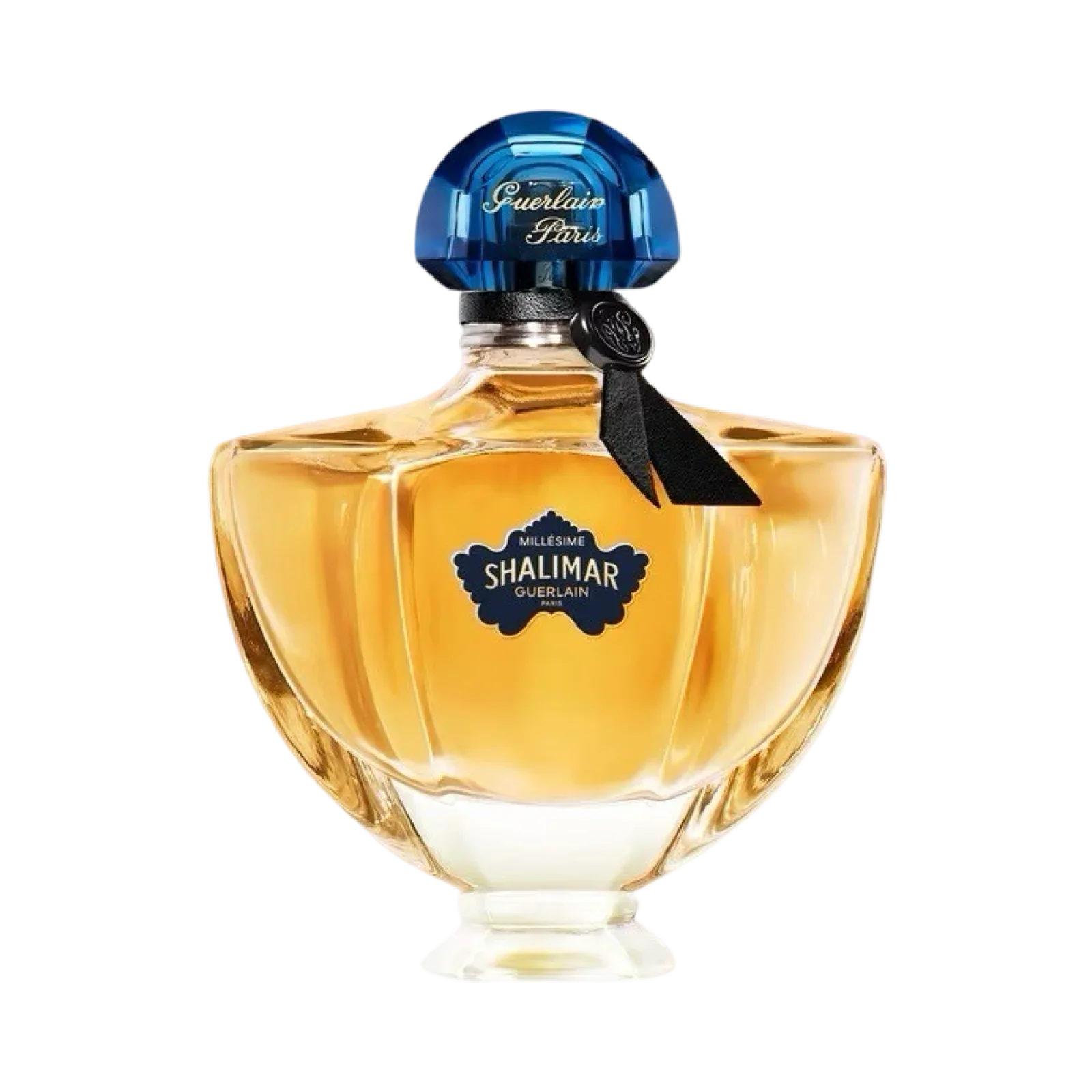
In Star Trek, many of the vessels that food and drink arrive in appear to be standardized by the replicator–they are the replicator's own designs. How much or how little specific packaging would be required for the "replication" of the perfume to feel complete? For example: would a bottle of Shalimar that arrives without its iconic bottle be a true Shalimar?
Data
The replicator, despite its fantastical elements, is essentially run by a computer. Applying some of what we know about computers, how confident are we that the information about what perfume "is" could be stored on a database? How certain could we be that the information in the replicator is accurate? What would we be afraid of, in relation to data and archives, if this technology existed?
Branding
If the replicator could produce any perfume we want at a moment's notice, how would our idea of what a "brand" is change? Is a perfume legible to us as "itself" without brand? How would the dissolution of all perfume "brands" as such in Star Trek's post-consumer society change what perfume is, for better or worse?
Context
Would wearing or smelling a replicator-generated perfume in the sterile, uniform environment of the deep-space exploration ships in Star Trek be a "complete" experience of a fragrance? How much does physical and social context inform what we understand about a perfume?
Ingredients
In perfume, ingredient sourcing and formula creation informs both the availability and the value of fragrance. Setting aside the idea of replicating entire perfumes, how would the ability to replicate individual perfume ingredients change perfume?
What is a Real Perfume?
If the replicator existed, how would we go about asking it to produce a "real" perfume? For example: if we asked it to produce Chanel No.5 for us, what do we think would happen? What additional details–including packaging, formulation, and context–would we need to provide until the perfume "felt" real?
Dupes
Is what the replicator produces a "dupe" of a perfume? What conditions are required for a perfume to be "the real thing?" How does exploring this question help us understand our own value systems about what is and is not a dupe or a copy?
Perfumers
What do we think would happen to the art of perfumery itself, including the formulation of new perfumes and the vocation of "perfumer" as a whole, if the replicator existed?